In brief
Before apparel ships, goods should be inspected against the approved sample and spec, covering measurements, workmanship and finish. That is the standard on an SBS Fashion program, where goods are inspected before they are released to ship. The sample and spec matter as much as the inspection, because they define what correct means.
Before the inspector arrives
An inspection report is only as useful as the reference behind it. If nobody can say which sample was approved, which spec revision applies and what tolerance was agreed at the sweep, a failed measurement becomes an argument between your office and the factory, and the ship date settles it.
The minimum is one signed and dated sample, one current spec and one agreed defect list, in the inspector’s hands before they walk in.
Measurements
Pull garments across the size run and measure them flat against the spec: chest, waist, hip, sweep, length, sleeve, whatever the style calls for. Measuring only the base size is a common shortcut. Grading errors live at the ends of the range, in the XS and the XXL that were never fitted.
Tolerances should reflect the fabric. A rigid woven can hold a tighter number than a loose-gauge sweater, and a spec sheet with the same half inch on every point was copied from somewhere else. Anything washed or garment dyed gets measured after that process, on goods from the bulk wash.
Workmanship

This is the part most people picture: an inspector at a table turning a garment inside out under good light. Stitch density. Skipped and open seams. Puckering at the placket. Pocket symmetry, collar points, whether stripes and checks meet where the sample says they meet. Zips run and buttons survive a firm pull. The label has to be correct as well as straight, since a crooked label is cosmetic and a wrong fiber content is a legal problem.
Good inspectors read what the garment says about the line. Puckering in one size or one bundle points to a particular operator or machine, and that tells the factory where to walk. A defect count on its own tells nobody anything.
Finish
Finish is the hardest of the three to write down and the first thing a retail buyer notices. Check shade against the approved standard in an agreed light booth, commonly D65 for daylight and TL84 or CWF for store lighting. A navy can match under one and turn purple under the other. Then shade within the garment and across cartons, wash effect, hand feel, pressing and folding, and the hangtags, polybags and carton marks.
The arithmetic of AQL
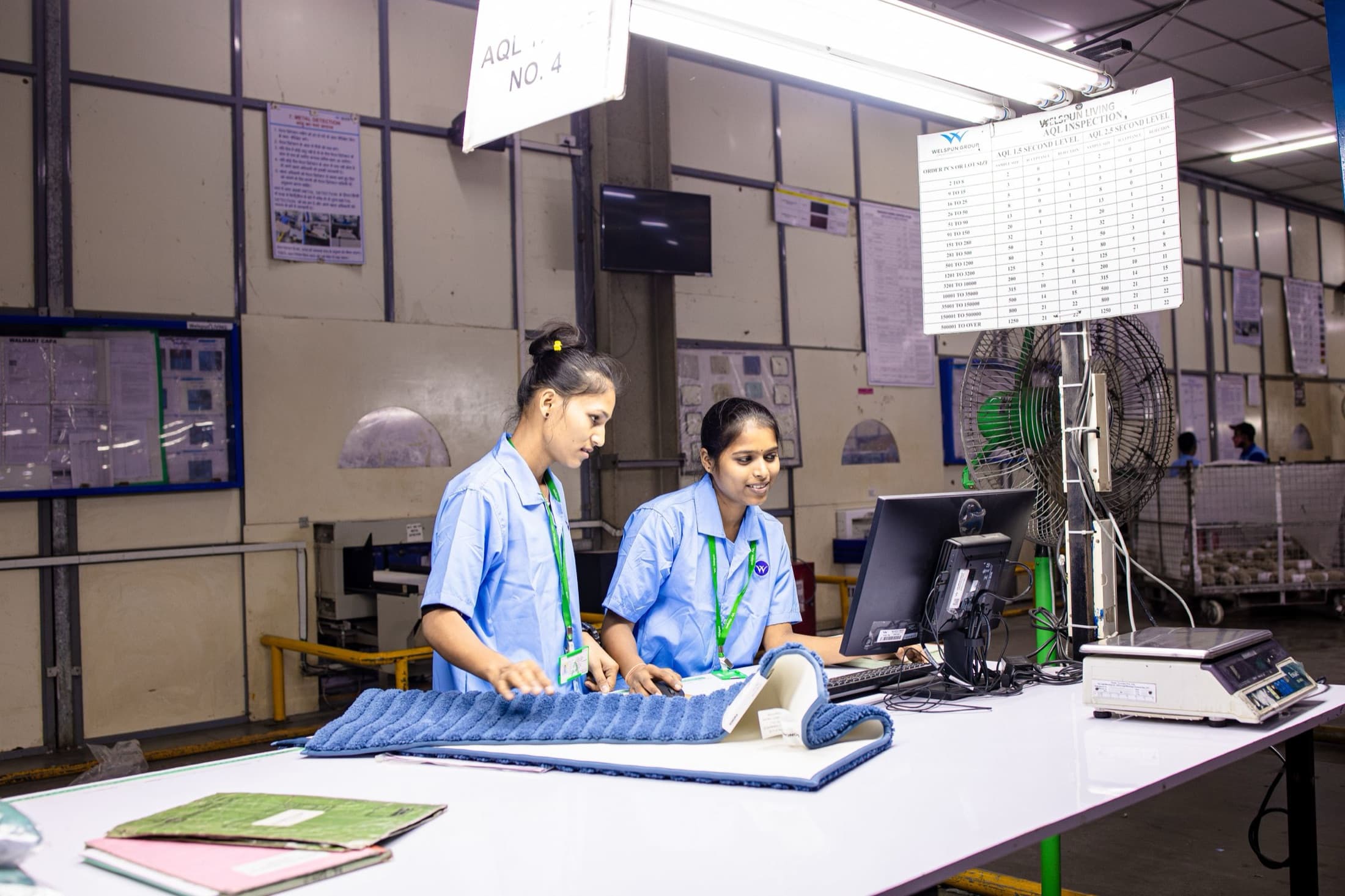
Most final inspections work from a statistical sample under a plan known as AQL, or Acceptance Quality Limit, based on ISO 2859-1. The lot size and the inspection level, commonly General Level II, set how many units get pulled at random. A common choice of limit is 2.5 for major defects and 4.0 for minor, with no critical defects accepted.
Run the numbers before you agree to them. On a lot of 5,000 pieces, General Level II pulls 200. At AQL 2.5 the lot passes with up to 10 major defects in that sample, which is 5 percent.
A pass leaves defective garments in the cartons by design, and your customer finds some of them. A premium brand on a small order may want something tighter. Whatever you choose, make it a decision.
What final inspection cannot do
At AQL 2.5 the lot passes with up to 10 major defects in that sample, which is 5 percent.
It takes place when the order is finished and most of it is packed, and by then your choices are rework, accept or miss the date. Quality gets decided at fabric approval, at the pre-production sample and in the first days on the line, which is where people next to the production earn their cost.
Settle these before the cut
- Which approved sample and spec revision is the reference.
- The tolerance at each point of measure, set by fabric type.
- What counts as a critical, major and minor defect on this style, in writing.
- The sampling level, and who pays for a re-inspection.
- What happens to a failed lot, and who has the authority to make that call.